I do own some KRFT since I'm an old MO shareholder ... no idea how much of course, just stuck in a drawer and forgotten about.

Captive Order Flow
Selected bits from Interactive Broker's latest 10-K, bold [and comments in brackets] are mine:
"Market Making—Timber Hill ... Most of the above trading activities take place on exchanges and all securities and commodities that we trade are cleared by exchange owned or authorized clearing houses. Recently, the emergence of High Frequency Traders and others who compete with us but do not regularly provide liquidity [zing!] have put our market making operations under pressure and its relative significance has diminished."
...
"Market Making
Historically, competition has come from registered market making firms which range from sole proprietors with very limited resources to large, integrated broker-dealers. Today, Timber Hill's major competitors continue to be large broker-dealers, such as Goldman Sachs, Morgan Stanley, UBS, Citigroup, Bank of America Merrill Lynch, and niche players such as Citadel, Susquehanna, Virtu, Wolverine Trading, Group One Trading, Peak6 and Knight Capital Group. Some of our competitors in market making are larger than we are and have more captive order flow, although this is less true with respect to our narrow focus on options, futures and ETFs listed on electronic exchanges.
The competitive environment for market makers has evolved considerably in the past several years, most notably with the rise in high frequency trading firms ("HFTs"), which transact significant trading volume on electronic exchanges by using complex algorithms and high speed execution software that analyzes market conditions. HFTs that are not registered market makers operate with fewer regulatory restrictions and are able to move more quickly and trade more cheaply. This issue is currently an area of focus amongst regulators who are examining the practices of HFTs and their impact on market structure."
...
"We face competition in our market making activities.
In our market making activities, we compete with other firms based on our ability to provide liquidity at competitive prices and to attract order flow. These firms include registered market makers as well as high frequency trading firms ("HFTs") that act as market makers. Both types of competitors range from sole proprietors with very limited resources to a few highly sophisticated groups which have substantially greater financial and other resources, including research and development personnel, than we do [you mean the "niche players" listed above?]. These larger and better capitalized competitors may be better able to respond to changes in the market making industry, to compete for skilled professionals [better nerds], to finance acquisitions, to fund internal growth and to compete for market share generally.
HFTs that are not registered market makers have certain advantages over registered market making firms that may allow them to bypass regulatory restrictions and trade more quickly and cheaply than registered market makers at some exchanges. We may not be able to compete effectively against HFTs or market makers with greater financial resources, and our failure to do so could materially and adversely affect our business, financial condition and results of operations. As in the past, we may in the future face enhanced competition, resulting in narrowing bid/offer spreads in the marketplace [aren't narrowing spreads good for the little guy?] that may adversely impact our financial performance. This is especially likely if HFTs continue to receive advantages in capturing order flow or if others can acquire systems that enable them to predict markets or process trades more efficiently than we can."
...
"Market making segment results declined in 2014 due to the continuation of a difficult operating environment for market makers with strong competition from high frequency traders (HFT's) and historically low volatility levels, which depressed our trading gains."
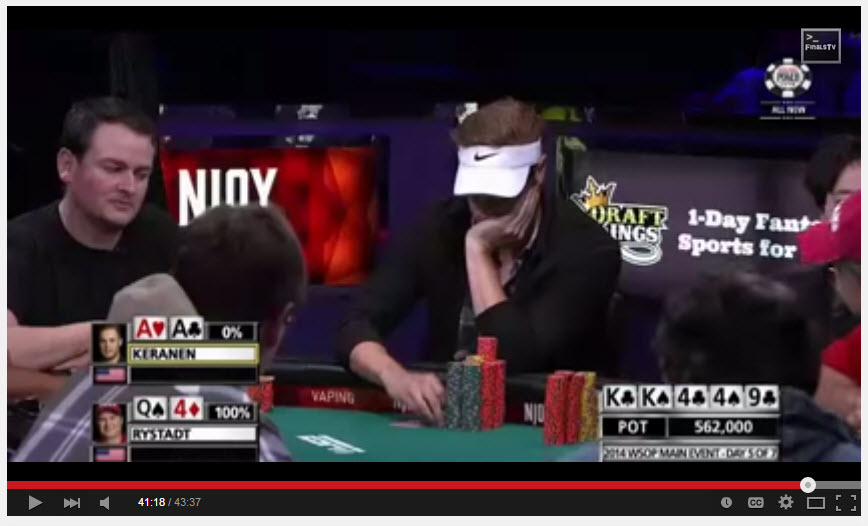
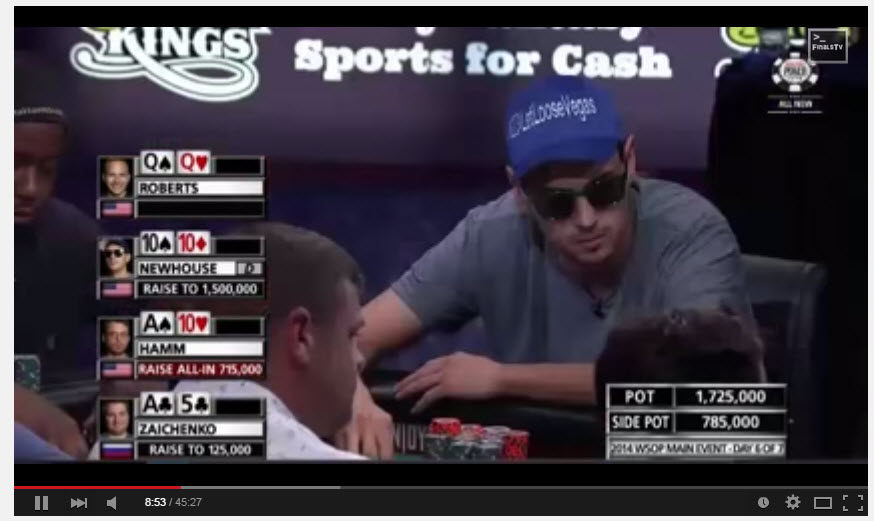
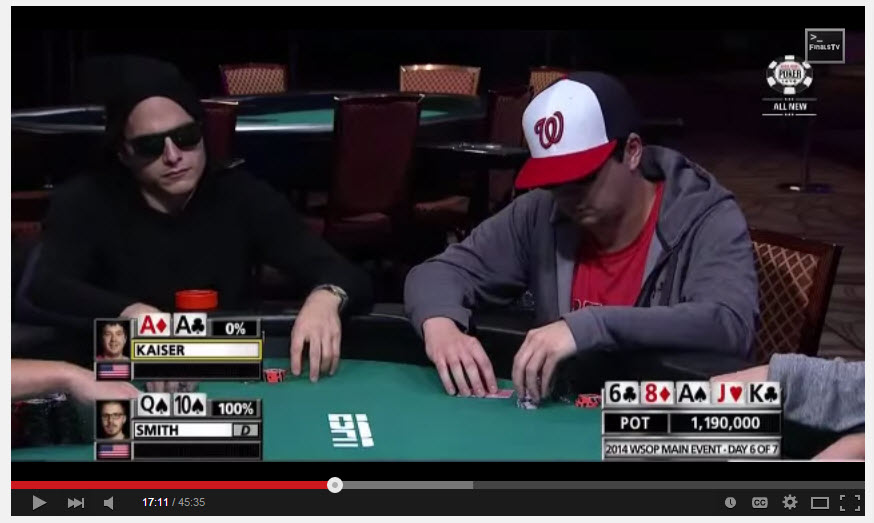
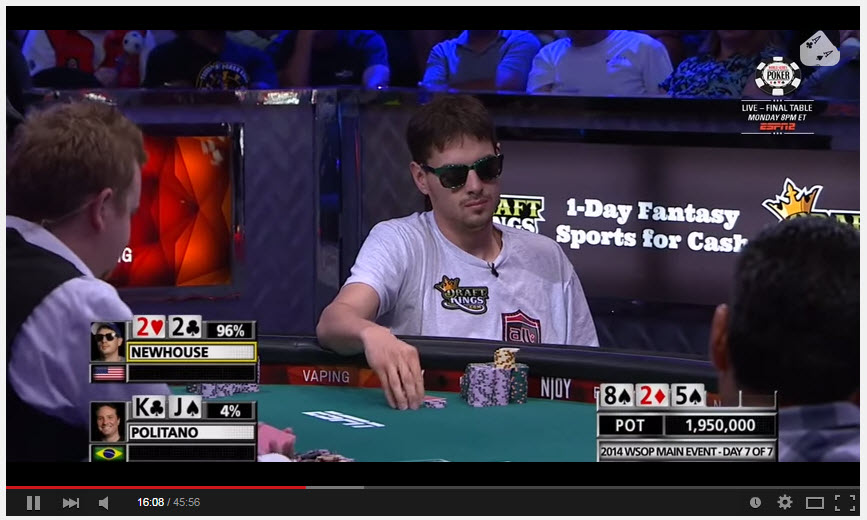
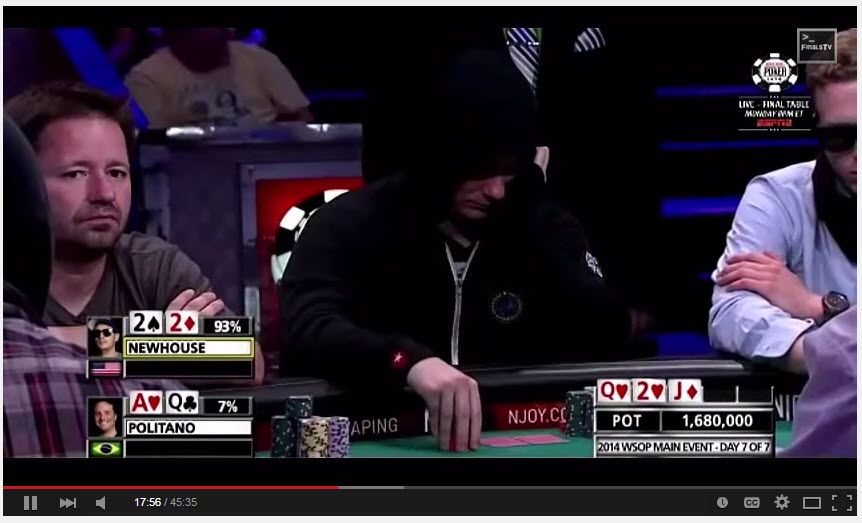
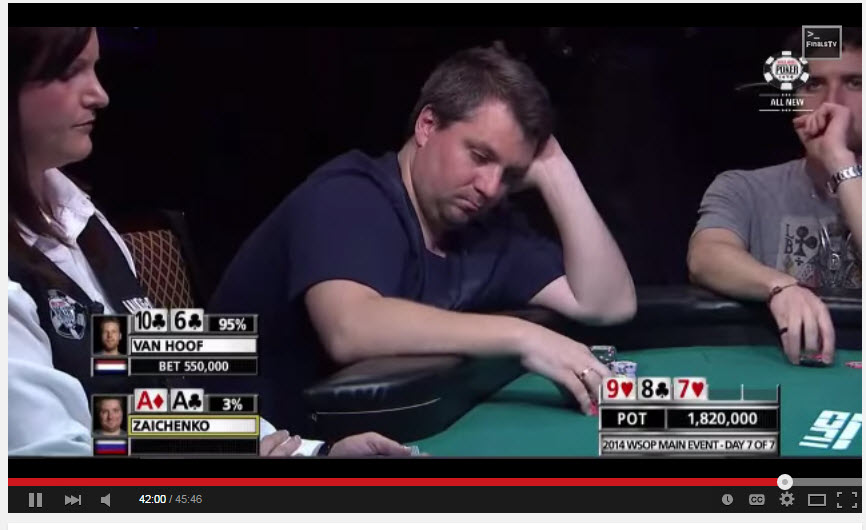
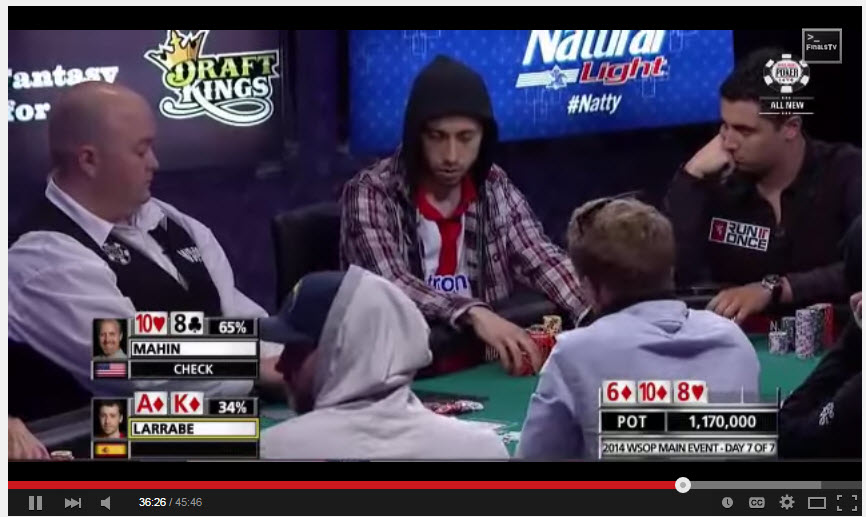
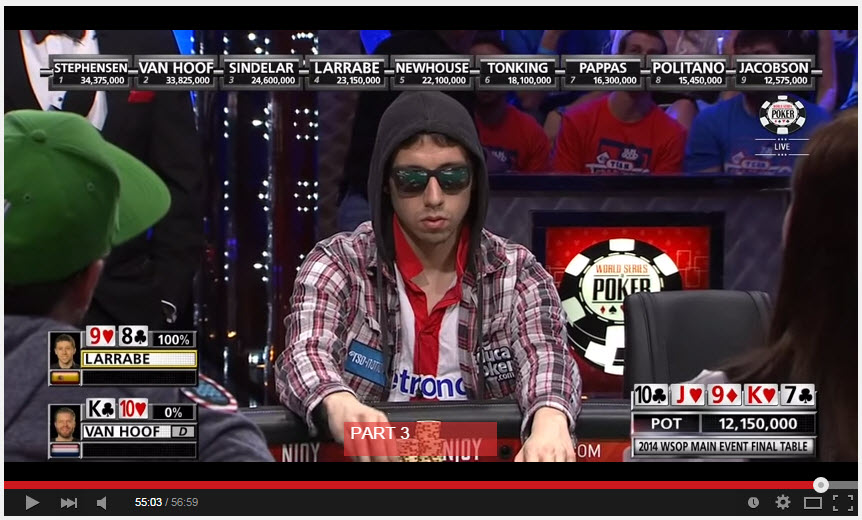
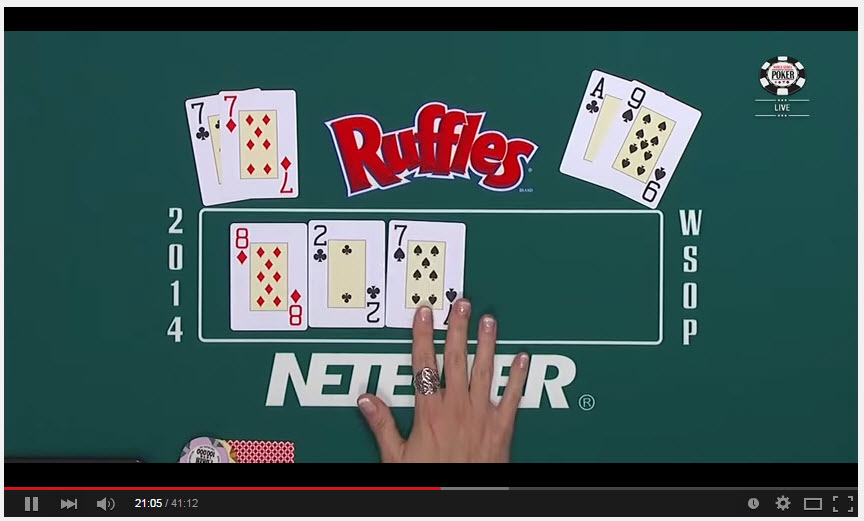
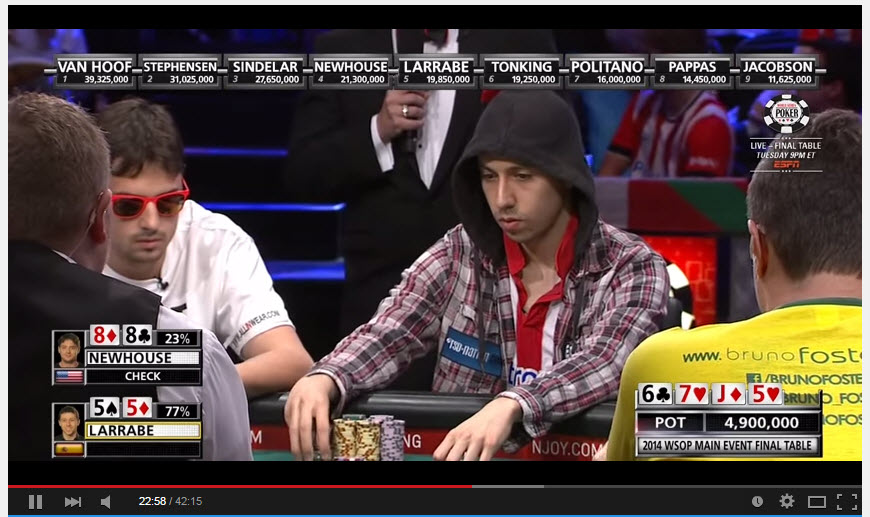
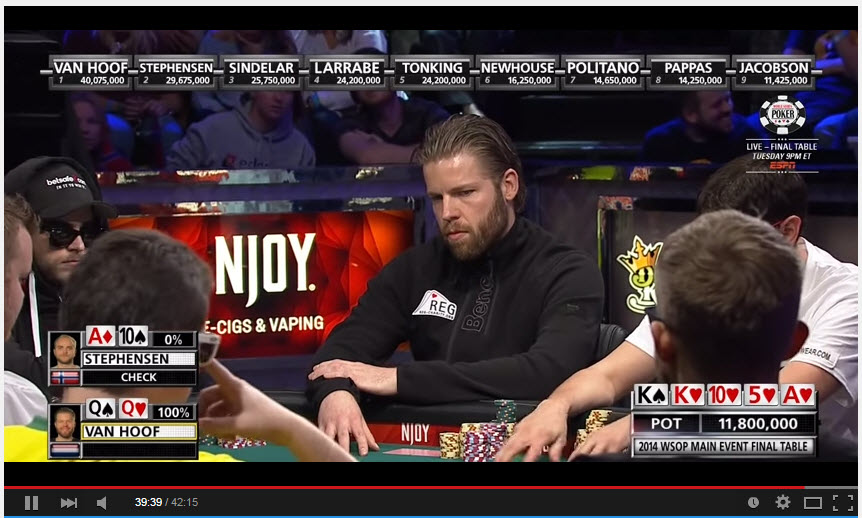
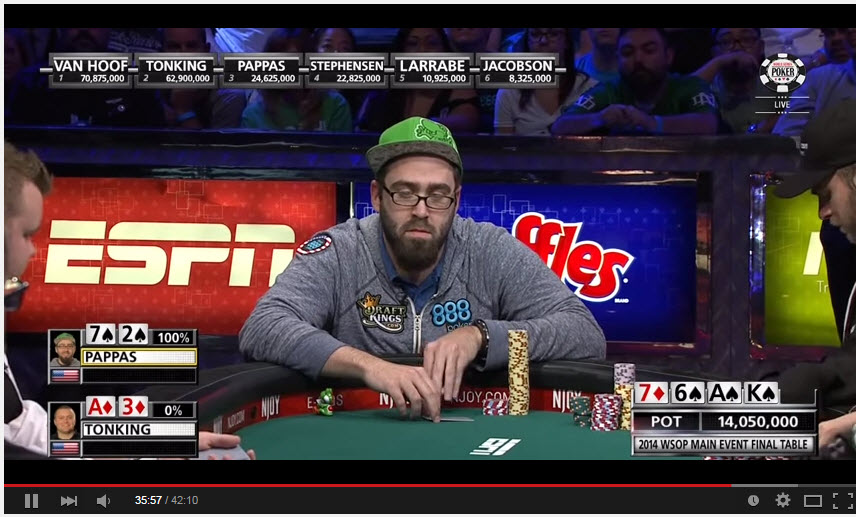
WSOP 2014, Selected Hands
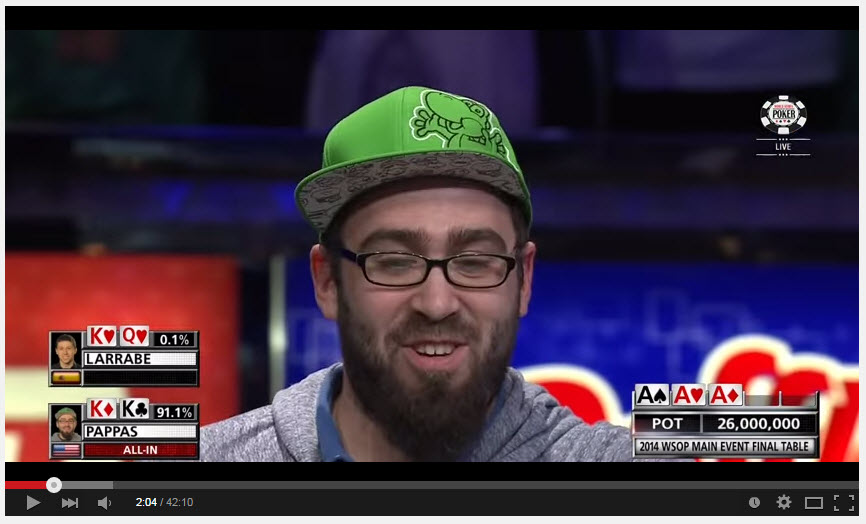
I got around to watching most of the 2014 World Series of Poker final tables ... I didn't watch too much of the three- and two-handed play at the end (though that can also be very interesting). Here are screenshots of a few of the hands that I enjoyed watching:
ETF Trading Portfolio Update -- March 23, 2015
Cutting losses in the bonds and silver ... the beauty of being a guru based in his parents' basement is that he can call a "generational low" in the bonds, and then two weeks later reverse himself.
Youku Tudou At All-time Low
YOKU put out this press release on Thursday evening and held a conference call at 9 PM (eastern time). There was a chance to get short above $15 after hours, but there was next to no liquidity and I don't know how easy it is to locate shares to short. I'm interested to talk with people who traded this one on Friday (or Thursday night).
Reuters Dot Com Now Blocked In China
It's true, I turned off my VPN and this is what I get:
Turn the VPN back on and we're in business:
Amicus Coronado, 1 Minute View
Two biotech stocks (surprise!) unusually active today ... would have been hard to make money in Amicus (FOLD) if you weren't in there pre-open ... Coronado (CNDO) gave back a lot into end of day, but probably still a profitable play for alert traders.
Gold Miners Pop, 1 Minute View
Fed day, everything moves, Gold Miners moved the most ... NUGT is the triple leveraged long play (its opposite is the more cleverly named DUST). Would like to see all the trading between 14:00:00 and 14:01:00 but can't do that with a $9.99 data feed. Even paying $9.45 would have made sense carrying into end of day.
General Cable Pop, 1 Minute View
I don't have the scanner results from yesterday since I was busy streaming TV shows (bandwidth priorities!), but I assume it would have caught BGC ... rumored buyout.
Click to enlarge, as always (helps if you have big monitor, not a phone or tablet)
Himax Downgrade, Delayed Reaction
Didn't notice this one at the time but went back and checked the scanner from 3/16 and sure enough it was there.